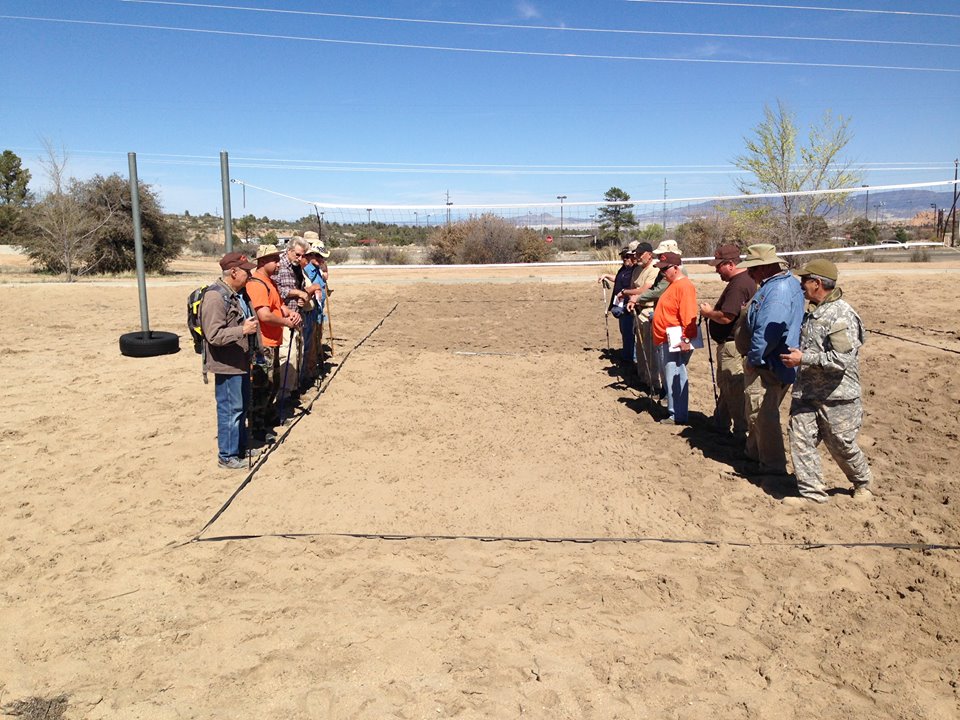
The tracking pit is an incomparable training tool for the visual tracker: the tracking pit enhances a visual tracker’s ability to identify, interpret, and formulate information utilizing indicators from someone or something being tracked. A tracking pit does not need to be anything fancy – just an area with sand or soft dirt that can be raked and smoothed out so that any tracks or other sign stand out like a neon sign.
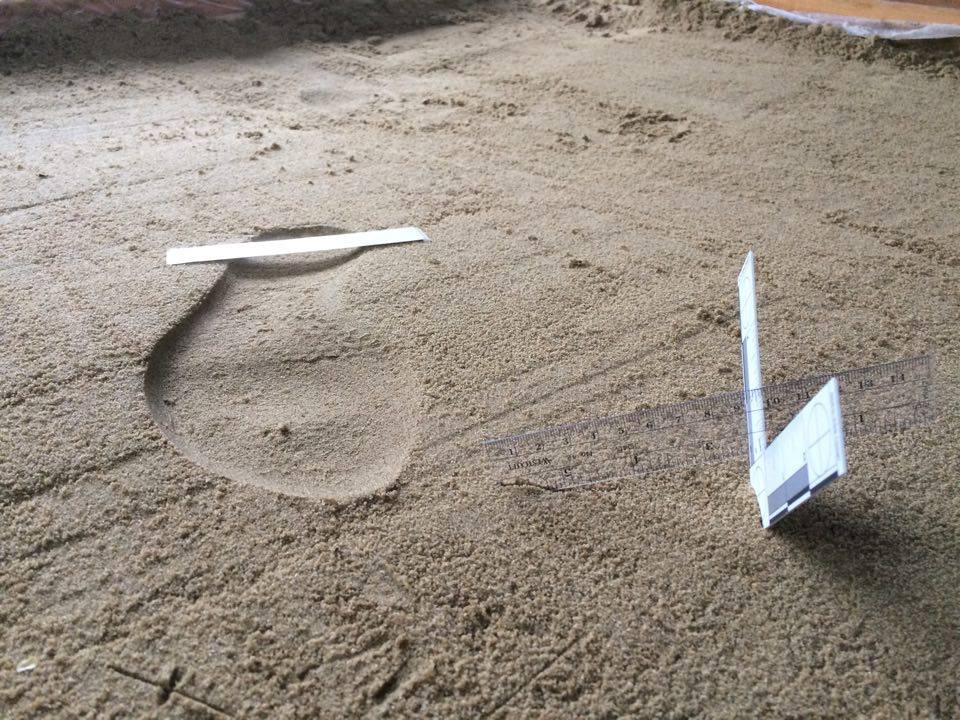
Because of the “blank canvas” background, even the most novice tracker can start to pick up on pressure releases, drag marks, disturbances, or other action indicators (both conclusive and inconclusive.) Tracks tell a story like a book, and the tracking pit is a great book to learn from. Many scenarios and actions can be covered in a tracking pit; once a tracker can pick up on every clue of an action in the tracking pit, it will be that much easier for them to pick up on and identify that same action when out in the field.
Some training exercises that can be done in the tracking pit are: walking backwards, normal walking, fast walk, running, crawling, falling and then getting back up, clothing and its outlines (pockets, belts, hems, etc.,) side hop or stepping, carrying another person, foot measurements, gait analysis, pitch of feet, prosthetic limbs/crutches, litter (cigarettes, tobacco, feces and urine,) dogs working with a handler, and vehicle tracks. For Tactical Trackers, it’s important to include security halts, going prone, kneeling, contact drills, injuries, counter tracking, detection of counter tracking, various gear and what it looks like when laid on the ground (packs, rifles, weapons, etc.) and IEDs or buried bomb placement.
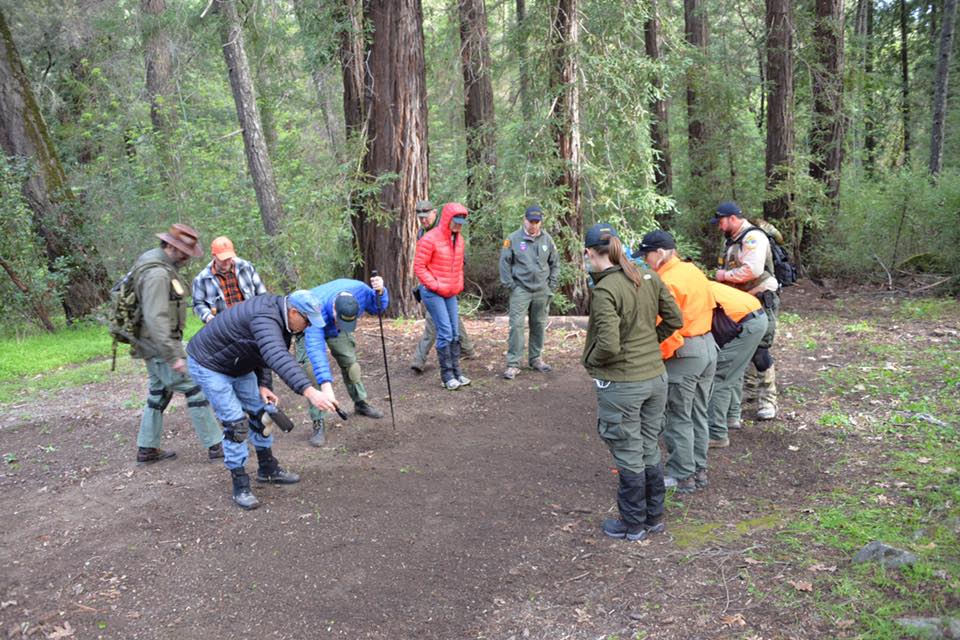
Give this incredible training tool a try, and see how much more you will be able to see!
 Professional Tracking Services